What Is the Circular Economy? How PET Enzymatic Recycling Closes the Loop

Jump to section
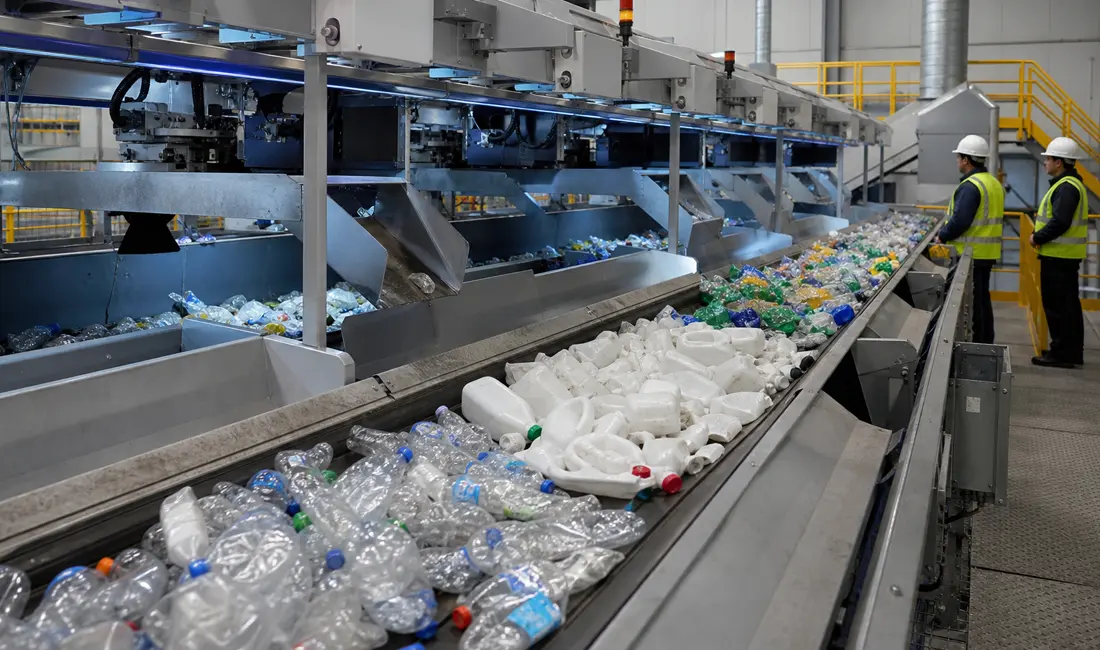
A circular economy keeps products and materials in use for as long as they provide value. It replaces the linear pattern of taking resources, making products, and discarding them. For plastics, this change requires more than placing used items in a recycling bin. Product design, collection, sorting, recycling, material quality, and end markets must work as one system.
Polyethylene terephthalate (PET) is a useful example. It is widely used in bottles, trays, films, and polyester textiles. PET can be recycled, but not every waste stream can return to the same type of product at the same quality. PET enzymatic recycling adds another route by breaking the polymer into recoverable building blocks that can be purified and used to make new PET.
This article explains what the circular economy means, what closing the PET loop involves, and why conventional recycling cannot handle every PET waste stream. It also covers the main steps of PET enzymatic recycling, compares it with mechanical and chemical routes, and outlines the conditions needed to build a practical circular PET system.
A circular economy is a system that aims to prevent waste and keep materials at a useful value. It does not depend on one recycling method. It connects decisions made across the full product life cycle.
A linear economy follows a take-make-dispose path. Raw materials are taken from nature, changed into products, and later burned, buried, or lost as waste. Each lost product creates demand for more virgin material.
A circular material flow tries to reduce that loss. Products stay in use through reuse, repair, refurbishment, and recycling. For PET manufacturers and buyers, this changes how value is measured. A package or textile is not only a finished product. It is also a possible source of future raw material.
Circularity does not mean that virgin inputs disappear at once. Collection losses, process losses, and growing demand may still require virgin material. The practical goal is to reduce avoidable losses and keep recovered resources in productive use.
The circular economy is commonly built around three connected principles:
For PET, the second principle has the most direct link to recycling. However, the first principle is just as important. Labels, adhesives, colors, coatings, and blended fibers can affect what happens after a PET product is collected.
Recycling alone cannot create a circular economy because a recyclable product may never be collected or recycled. A technical claim about recyclability does not describe the performance of the full system.
A working loop needs suitable product design, clear material identification, collection capacity, stable recycling operations, quality standards, and demand for the recovered output. If any part is missing, PET may move into a lower-value use or leave the material cycle.
Recycling should also support reduction and reuse where those options are practical. The purpose is not to recycle more material at any cost. The purpose is to use fewer resources while keeping necessary materials productive.
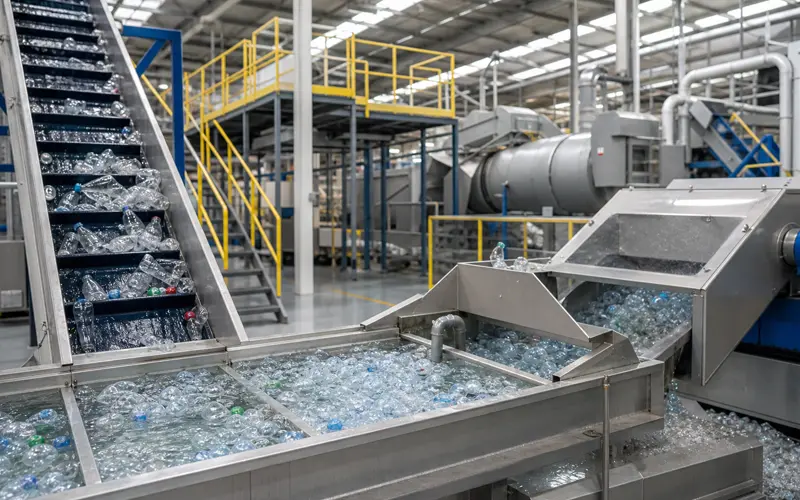
Closing the PET loop means turning used PET into feedstock for new PET products while preserving enough quality and value for another useful cycle.
PET is produced from terephthalic acid and monoethylene glycol. These building blocks are polymerized into PET resin, which is then processed into items such as packaging, film, and polyester fiber.
After use, PET must be collected, identified, sorted, and prepared. A suitable stream can be mechanically reprocessed into flakes, pellets, fibers, or new packaging resin. Another option is depolymerization, which breaks PET back into chemical building blocks. When those outputs are purified and polymerized again, they re-enter PET production.
The loop is only as strong as its weakest stage. High recycling yield has limited value if collection is poor. High-purity monomers have limited value if there is no qualified end market.
Closed-loop recycling usually returns a material to the same product category. Bottle-to-bottle and textile-to-textile recycling are common examples. Open-loop recycling moves the material into a different product category, such as converting bottles into polyester fiber.
Open-loop recycling is not always a poor result. A different application may keep the material in use for many years. However, it may not create new feedstock for the original product category. That difference matters when packaging or textile producers need a stable supply of recycled content.
A strong PET loop protects material value, not only recycling volume. Manufacturers must consider recovery yield, purity, color, molecular performance, traceability, and fitness for the next application.
For example, a collected PET item may still count as recycled when it becomes a lower-grade product. Yet that route may end after one more use. A monomer-based route may offer a path back to controlled PET grades, but only when the recovery and purification steps deliver suitable quality.
Conventional PET recycling closes many useful loops, but it does not handle every feedstock equally well. Waste quality and product design strongly affect the result.
Mechanical recycling works well for clean, well-sorted PET streams with known composition. The process usually includes sorting, washing, size reduction, drying, melting, filtration, and pelletizing. Additional treatment may be used when the target grade needs tighter performance.
This route keeps the polymer largely intact and avoids breaking it into monomers. It is therefore often the most direct option when the feedstock and final specification match. Enzymatic recycling should complement this route rather than displace it from streams where mechanical recycling performs well.
PET quality can change during use and repeated melt processing. Moisture, heat, oxygen, and contaminants may affect chain length, color, odor, or processing behavior. Careful drying, filtration, decontamination, blending, and solid-state treatment can manage some of these issues, but they add process steps and cost.
The result depends on the input. A controlled bottle stream may support high-value recycling, while mixed or degraded feedstock may not meet the same specification without further treatment.
Some PET-rich waste streams are harder to recycle through standard mechanical routes. Examples include colored or opaque packaging, multilayer structures, thin films, polyester textiles, and blended fabrics.
These materials may contain dyes, finishes, adhesives, other polymers, cotton, or elastic fibers. Their form and composition can make sorting and melt processing more difficult. In some markets, collection systems for textile waste are also less mature than bottle collection systems. These gaps create a role for other recovery methods.
PET enzymatic recycling uses selected enzymes to hydrolyze PET into smaller molecules and recoverable monomers. It is a controlled industrial process with four main stages.
The process starts with PET-rich waste that has been collected and checked for composition. Preparation may include sorting, washing, shredding, drying, or a treatment that changes the material structure and exposes more PET surface.
Preparation matters because enzymes act at the polymer surface. Particle size, crystallinity, contamination, and PET content can affect the reaction. The required steps and operating conditions vary by feedstock and process design. Enzymatic recycling should not be described as a way to place unsorted mixed waste directly into a reactor.
During depolymerization, a PET-active enzyme helps water break the ester bonds in the polymer chain. The solid PET is converted into soluble products, including terephthalic acid and ethylene glycol, through reaction pathways that may also form intermediate compounds.
The enzyme is selective for a chemical structure in PET. This selectivity can help recover value from certain PET-rich materials that also contain dyes or other components. However, reaction rate and yield still depend on enzyme performance, feedstock condition, and process control.
The PET enzymatic recycling process developed by Yuantian Biotechnology is designed to convert PIR and PCR PET feedstocks into recovered r-PTA and r-MEG. The stated feedstock scope includes polyester fabric, beverage bottles, and PET film.
Depolymerization does not finish the recycling process. The reaction mixture must be separated and purified before the recovered materials can return to polymer production.
Depending on the process, operations may include solid-liquid separation, crystallization, washing, concentration, and distillation. These steps remove reaction residues and separate the target products. The resulting recycled terephthalic acid, or r-PTA, and recycled monoethylene glycol, or r-MEG, must meet the specification required for their next use.
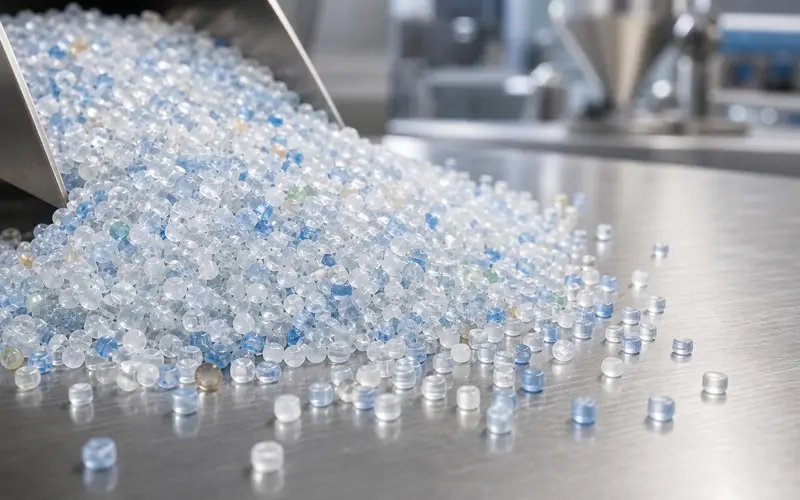
Qualified r-PTA and r-MEG can be polymerized to form new PET. This step reconnects waste treatment with resin and product manufacturing.
The new PET may be developed for packaging, textile fiber, engineering materials, or optical applications. The final use depends on resin grade, process control, product testing, and local rules. Recovered origin does not remove the need for normal quality checks.
PET enzymatic recycling helps close the loop by returning the polymer to reusable building blocks. This creates options for PET streams that may have limited high-value outlets.
Enzymatic processing can broaden the potential feedstock range beyond clean, clear bottles. Certain colored packaging, films, trays, and polyester textiles may become candidates when the process can expose and hydrolyze their PET content.
This does not mean that every item can follow the same process. Each waste stream still needs a technical review. PET content, non-PET layers, finishes, contamination, moisture, and collection method can change both yield and cost.
Depolymerization changes PET into soluble chemical products. Many dyes, fillers, fibers, and other polymers do not become the same target monomers. Later separation and purification steps can therefore recover the PET building blocks from some complex inputs.
The selectivity is useful, but it does not make impurities disappear. Non-PET materials remain as residues or enter other process streams and must be managed safely.
Mechanical recycling works with the existing polymer, while enzymatic recycling returns PET to the monomer level. This difference can reduce the dependence of the next resin grade on the physical history of the old product.
When r-PTA and r-MEG meet the required specifications, they can support new PET with controlled properties. This creates the technical basis for repeated recycling. It is still a closed-loop potential, not proof that every unit of material will circulate without loss.
Monomer recovery can connect PET waste from several sectors with new PET production. Waste packaging may supply building blocks for new packaging or fiber. Polyester textiles may return to textile production or another suitable PET application.
The best route depends on market demand and material value. A same-category loop may support a direct recycled-content target, while a cross-sector route may provide a practical outlet for material that would otherwise be lost.
No single PET recycling route is best for every feedstock. The suitable choice depends on input quality, target output, process impact, available capacity, and cost.
| Recycling route | Suitable feedstock | Main output | Main role | Key limits |
| Mechanical recycling | Clean, sorted PET with controlled composition | Flakes or pellets | Keeps the polymer in use through a short process route | Input quality and repeated heat history can affect output |
| Enzymatic recycling | PET-rich streams suited to enzyme and pretreatment conditions | Terephthalic acid and ethylene glycol | Recovers PET at the monomer level through selective hydrolysis | Requires preparation, enzyme performance, separation, and purification |
| Conventional chemical recycling | PET streams suited to hydrolysis, glycolysis, or methanolysis | TPA, EG, BHET, DMT, or other intermediates | Breaks PET through chemical reactions for reuse as feedstock | Conditions, reagents, outputs, and purification needs vary by route |
Mechanical recycling should remain a first option when a clean PET stream can meet the next product specification. It uses existing collection and processing systems and avoids unnecessary depolymerization.
Enzymatic recycling is most useful where selective PET depolymerization creates more value than direct melt reprocessing. Its role may be stronger for certain textiles, colored materials, films, and other PET-rich streams with limited high-quality outlets.
Chemical recycling is a broad group of technologies rather than one process. Hydrolysis, glycolysis, and methanolysis use different reagents and produce different outputs. Their value must be judged for the chosen feedstock and end use, not as one general category.
Technology alone cannot create a circular PET economy. The full system must deliver enough suitable waste, reliable recycled outputs, and clear evidence of value.
Recycling plants need stable feedstock volumes and known material composition. This requires collection programs, sorting capacity, supplier controls, and agreed bale or flake specifications. A process cannot recover PET that never enters the collection system.
Product design can reduce problems before recycling starts. Packaging and textile producers should consider colors, labels, adhesives, coatings, additives, fiber blends, and removable parts. Material records and traceability data can also help recyclers choose the right route.
Industrial decisions require data for the full process. Useful measures include PET recovery yield, monomer purity, enzyme use, reaction time, water demand, energy demand, waste generation, and operating cost.
Environmental claims should include collection, preparation, reaction, separation, purification, and product manufacturing. Mild conditions in one stage do not by themselves prove that the whole route has a lower footprint. A clear life-cycle assessment can support a fair comparison.
Recovered materials need batch controls for identity, purity, color, moisture, contaminants, and other application-specific properties. Traceability should connect the waste source, recycling process, recovered monomers, resin batch, and final product.
Regulated uses need further review. Food-contact packaging, for example, requires suitable purity and compliance evidence under the rules of the target market. A recycled source or monomer-based process does not provide automatic approval.
No. Enzymatic recycling is a controlled industrial process that uses selected enzymes, prepared feedstock, and managed reaction conditions. It aims to recover useful chemical building blocks. It does not mean that a PET bottle or polyester garment will quickly break down in soil, water, or a normal waste bin.
Not with the same reaction. PET-degrading enzymes target bonds found in polyester chains. Polyethylene (PE) and polypropylene (PP) have different carbon-carbon backbones and need different recycling methods. A mixed item may contain PET, PE, PP, paper, metal, or other materials, so non-PET parts still require separation or another recovery route.
No. Food-contact use depends on the recycling process, recovered material purity, intended conditions of use, testing, documentation, and the rules of the target market. Regulators may assess whether a process can control contaminants and produce suitable material. Manufacturers should confirm the applicable approval path before making a food-contact claim.
PET enzymatic recycling can strengthen the circular economy by recovering r-PTA and r-MEG from suitable PET waste. Once purified and qualified, these monomers can return to PET production and support new packaging, fibers, and other products.
The technology is one part of a larger system. Mechanical recycling remains important for clean and well-sorted streams. Enzymatic and chemical routes can address other feedstocks where monomer recovery offers a better path. Product design, collection, preparation, quality control, traceability, market demand, and regulatory review must connect these routes into a working loop.
Organizations exploring circular PET materials can review the research platform and process capabilities of ARCHIBIO to assess how enzymatic recycling may fit their feedstock and product goals.